
- Electronics is the biggest online category in Saudi Arabia (about 26% of revenue), but accessories, smart home and gaming gear are where new sellers break through.
- On noon, 2026's breakout niches are heat-driven drinkware, motion-sensor lights, storage and low-allergy beauty with Arabic labels.
- Beauty and cosmetics lead independent Saudi stores (20.1% of Salla sales), and fragrance is the top Eid gift.
- Check approvals while you pick products: SABER for electricals and toys, SFDA for cosmetics and food, CST for wireless devices.
- For Ramadan 2027 (around 8 February), sea stock from China should be ordered in November.
Gulf shoppers will pay for a good product. Most of what they buy is imported, and a lot of it comes from China.
That's why the right category matters so much. An air fryer with an Arabic menu costs CNY 150 ex-factory and sells for SAR 499 on noon. Pick the wrong one, and you're fighting Temu on price.
Below you'll find the categories that win in Saudi Arabia and the UAE in 2026. For each one, you'll see what proves the demand, how crowded it is, what the marketplace takes and which approvals you need. A product-selection checklist closes it out.
What sells best in the Middle East?
By revenue, electronics and fashion are the two biggest online categories. In Saudi Arabia, electronics alone is about a quarter of B2C ecommerce (ECDB).
But big isn't the same as easy. The best opening for a new seller is usually a category with strong demand and fewer specialist rivals.
Independent stores show where that demand sits. Here's what sells on Salla, the leading Saudi store builder:
Beauty, wellness and home come out on top. That's the DTC (direct-to-consumer) picture, where small brands win without competing with Jarir or eXtra on phones.
Marketplaces tell a similar story. Amazon says home, PCs, beauty, wireless and consumer electronics lead its Middle East stores. In 2025, it pointed Chinese sellers to furniture, smart home, gaming monitors and gaming chairs.
The category matrix at a glance
Every category below has proven demand. What differs is how crowded it is, what you pay and what paperwork comes first.
| Category | Demand signal | Competition | noon KSA referral fee | Main approval (Saudi) |
|---|---|---|---|---|
| Phone and computer accessories | Largest online category (~26%) | High | 20% to SAR 50, 15% above | SABER; CST if wireless |
| Home, storage and smart home | Salla home 14%; Amazon top category | Medium | 14% | SABER for electricals |
| Heat-driven drinkware | Stanley tumbler 410 units a day on noon | Medium | 14% | Light (SABER if electric) |
| Beauty and personal care | #1 on Salla (20.1%) | Medium | 9% to SAR 50, 12.5% above (generic 15%) | SFDA |
| Fragrance, oud and bakhoor | #1 Eid gift (50%) | High (local brands) | 15% | SFDA; dangerous goods by air |
| Modest and occasion fashion | 49% plan to spend more on Ramadan fashion | Very high | 27% | SABER for textiles |
| Toys, kids and baby | Toys: 36% Eid gift | Medium | Toys 14%; baby 8% to SAR 50, 15% above | SABER toy rules |
| Car accessories and outdoor | Featured on Amazon.sa's homepage | Low to medium | 14% (all other categories) | SABER for electricals |
| Gaming accessories | 25.8M+ Saudi gamers | Medium | 14%; headsets 20% | CST for wireless |
Want the noon fee detail for your category? See noon seller fees.
The hot categories, one by one
Electronics accessories
Electronics is the biggest category, and phones and laptops are a brand game. Your opening is the gear around them: cases, chargers, power banks, cables, earbuds and desk setups.
Margins here can be big. Cifnews reports a phone case that costs CNY 9 selling for nearly CNY 100 in the Gulf.
Anker proves you don't need to be cheapest. Its Middle East revenue reached USD 110 million in 2022. And one of its cables sells for AED 69 in the UAE.
The catch? Noon charges 20% on mobile accessories under SAR 50, so price above that line or bundle.
Home, storage and smart home
This is the most reliable category for Chinese factories. Gulf households are large, homes are big, and demand for organisers, racks, kitchen storage and smart plugs is steady all year.
Motion-sensor lighting is 2026's standout. One night light sold 70,000 orders in a month across Saudi Arabia and the UAE.
Small appliances fit here too, as long as they have an Arabic interface and the right plug and voltage.
Heat-driven drinkware
Summer in Riyadh and Dubai means insulated tumblers, water dispensers, USB water pumps and coffee scales sell all year. On noon, a Stanley tumbler moves about 410 units a day.
It's also one of the lightest compliance paths for a first product, unless it plugs in. Add a Gulf angle: bigger sizes for long car trips, or a gift box for Ramadan.
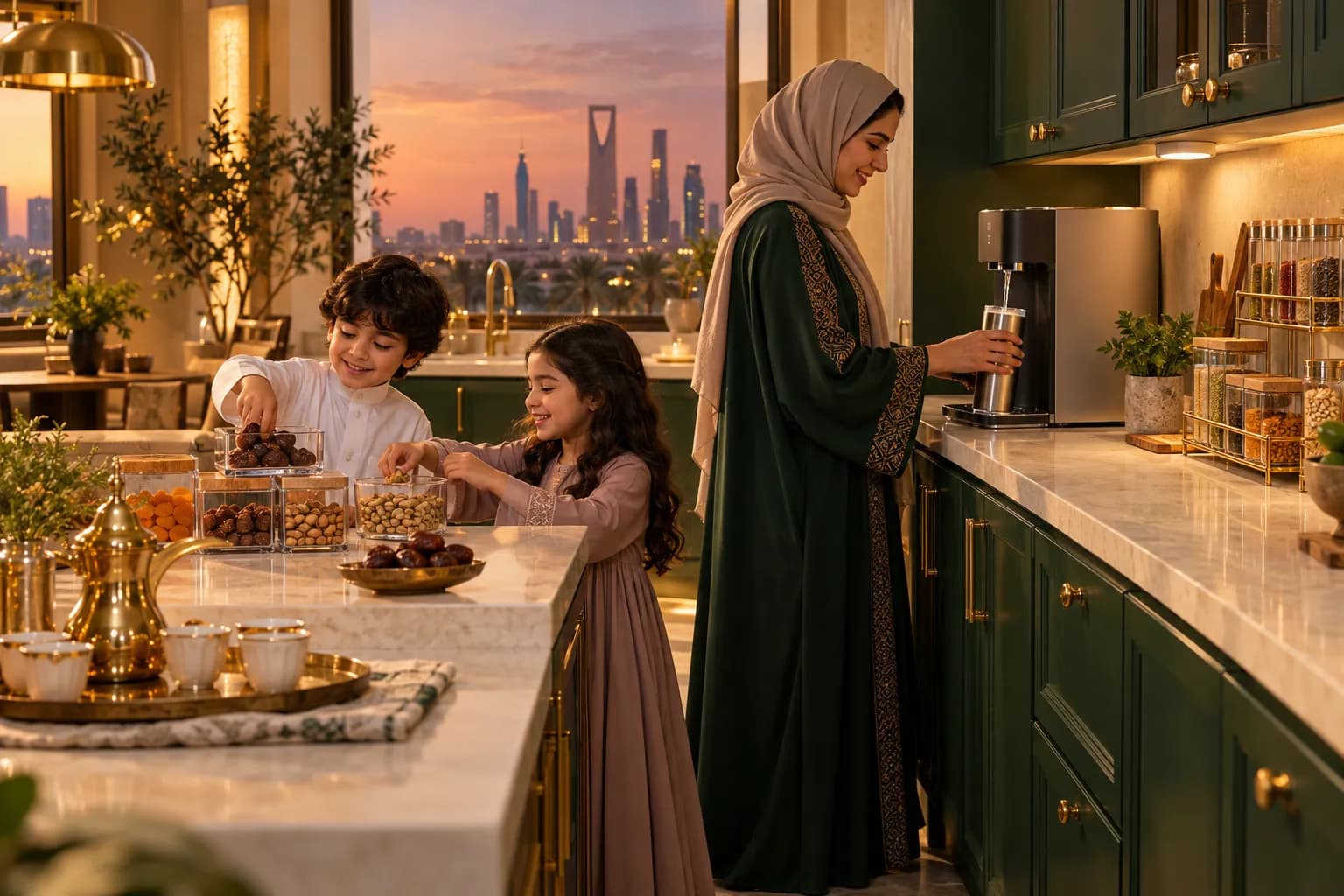
Beauty and fragrance
Beauty leads Saudi independent stores. Women are the core buyers: 48.8% of Saudi women online bought cosmetics online, against 25.7% of men (GASTAT).
Natural, organic and low-allergy products are trending on noon, and the pack needs an Arabic label.
Fragrance is a gifting category. Local oud and perfume houses like Arabian Oud rank among Saudi Arabia's top 20 retail sites, so compete on gift sets, diffusers, bakhoor burners and travel sizes rather than head-on.
Two practical points. Cosmetics need SFDA notification before you sell in Saudi Arabia, and perfume counts as dangerous goods for air freight.
Modest and occasion fashion
Fashion is huge and crowded. SHEIN, Trendyol and Temu own cheap basics, and noon takes 27% on apparel.
Where can you still win? Abayas, Eid and wedding outfits, kids' Eid wear and modest sportswear. Shoppers plan bigger fashion budgets for Ramadan, and sizing for Gulf body types matters more than the lowest price.
Toys, kids and baby
More than a fifth of Saudis are under 15, and toys are a top Eid gift. Educational toys, gift sets and outdoor play sell well around the holidays.
Toys fall under SASO technical regulations. Budget the SABER certificate into your launch cost from day one.
Car accessories and outdoor
Gulf life runs on cars, and weekend desert camping is a real habit. Phone holders, seat organisers, sunshades, dash cams, portable fridges and camping gear all fit.
Automotive is one of the departments Amazon.sa features on its homepage. Specialist competition is thinner than in phones or fashion.
Gaming accessories
Saudi Arabia has over 25.8 million gamers. Consoles belong to Jarir, eXtra and Amazon, but controllers, headsets, chairs and RGB desk setups are open.
Wireless controllers and headsets need CST (Communications, Space and Technology Commission) type approval, so check that first.
Ramadan and Eid: the seasonal winners
Ramadan and Eid are the Gulf's biggest buying moments, and 76% of Saudi shoppers hold purchases for Ramadan deals. Groceries, dates and sweets top the list, but fashion, fragrance, skincare and home goods all see bigger budgets.
The winners for a China seller are Ramadan décor, lanterns, serving sets, coffee and dallah sets, gift boxes, kids' toys and Eid outfits.
Timing is everything. Allow 10–12 weeks from factory order to Ramadan, production included. Sea freight alone takes 5–7 weeks from booking to warehouse check-in:
- Early November 2026Order Ramadan stock
Place factory orders for décor, serving sets and gift boxes. Book sea freight for late November.
- Late November 2026White Friday and Yellow Friday
The biggest Q4 sale. Use it to test gift sets and electronics accessories.
- Late December 2026Stock lands in the Gulf
Allow time for customs, SABER shipment certificates and warehouse check-in.
- Mid-January 2027Start Ramadan listings and ads
Shoppers start planning 2–3 weeks before Ramadan begins.
- ~8 February 2027Ramadan starts
Night-time shopping peaks. Push décor, home and fragrance.
- ~9 March 2027Eid al-Fitr
Gifting peaks: fragrance, toys, outfits and gift sets.
Dates follow the expected moon sighting. The full calendar is in Ramadan ecommerce.
Regulated categories: SABER, SFDA and CST
Most Gulf categories are open to China sellers. A few need approval first, and that's easy to plan if you check while you're still choosing products.
What does that mean for your first products? Start with low-risk lines like storage, drinkware and car organisers. Add electricals once your SABER process is running, then cosmetics once you have an SFDA representative.
Amazon also restricts food, tobacco, e-cigarettes and adult products for China cross-border sellers. The step-by-step process is in our SABER certification guide, and cosmetics and food rules are in SFDA rules for cosmetics, food and supplements.
Where the margin is
Gulf prices leave room, but fees and freight decide what you keep. Here's the air fryer priced for noon Saudi Arabia.
Say you ship 300 units to noon's warehouse in one LCL sea shipment. Each boxed fryer measures 0.04 cbm and weighs 5 kg, so the shipment is 12 cbm.
| Per unit | How it's worked out | SAR |
|---|---|---|
| Selling price on noon (VAT included) | 499 | |
| VAT you pass to ZATCA | 499 × 15/115 | −65 |
| noon commission | 15% (small appliances) of 499 | −75 |
| FBN fee | 5 kg standard parcel: SAR 13 up to 3 kg, plus SAR 1 per extra kg | −15 |
| FBN storage, two months | 1.41 cubic feet × SAR 2.75 × 2 | −8 |
| Ex-factory cost | CNY 150 | −77 |
| LCL sea freight | 12 cbm × USD 270 (ocean ~210 + CFS ~60), plus USD 250 port and paperwork, ÷ 300 | −44 |
| Customs duty and fee | 5% of the SAR 121 CIF value, plus the 0.15% customs fee | −6 |
| SABER | SAR 500 product certificate + SAR 350 shipment certificate, ÷ 300 | −3 |
| Ads | About 8% of the price | −40 |
| Left per unit | 166 |
That's about a third of the shelf price. Import VAT and the VAT on noon's fees come back to you once you're VAT-registered in Saudi Arabia.
Freight is the line to watch. From about 20 cbm, a 20ft container gets cheaper than LCL, so a second, bigger order lowers it. Get one all-in quote to noon's warehouse door, including the broker and the truck from port.
Three rules protect it:
- Price above the SAR 50 fee line in categories where noon's rate drops for higher prices.
- Keep cross-border parcels under SAR 1,000 so Saudi orders stay duty-free (VAT still applies).
- Choose simple, durable products. Complex products bring returns and after-sales costs that are expensive to handle from China.
Run your own product through the numbers:
GCC landed cost calculator
Duty, import VAT, customs fees and SABER costs for Saudi Arabia, the UAE and the wider GCC
GCC default is 5%. Check your HS code: some Saudi lines are 10-25%.
Your landed cost
- GoodsSAR 750
- Shipping + insuranceSAR 94CIF valueSAR 844
- Customs dutySAR 0
- Customs feesSAR 15
- Import VATSAR 129
- SABER (incl. VAT)SAR 0
- Total landed costSAR 988
- Under the de minimis threshold: no customs duty.
- Flat SAR 15 fee for online-store parcels up to SAR 1,000.
Estimates based on published ZATCA, Dubai Customs, SABER and GCC customs rules as of October 2026. VAT is charged on CIF + duty + customs fees. Confirm rates for your HS code with a licensed customs broker.
How to read demand signals
You don't need paid tools to check Gulf demand. Four free signals cover most of it:
- Marketplace best-seller lists. Amazon.sa publishes best sellers for 18 departments, including Toys, Automotive, Home and Pet Supplies. On noon, check how many close matches a search returns and how fast they deliver.
- Google Trends. Set the country to Saudi Arabia or the UAE and search in informal Arabic. Saudis type جوال for phone, while Emiratis lean towards موبايل and هاتف. Spellings without hamza dominate too.
- Semrush traffic rankings. Category specialists only reach the top 20 Saudi retail sites when demand is deep. Perfume, pharmacy, electronics and home specialists are all there.
- Salla and Zid stores. Find independent stores selling similar products, then look at their prices, reviews and bundles.
Want more ideas from the Saudi side? See best products to sell in Saudi Arabia.
Your product-selection checklist
Run every product idea through this list before you place a factory order:
Notes for factories
- Lead with what you already make best. Then adapt it: Arabic interface, Saudi 220–240 V plug and a Gulf-sized pack.
- Test before you certify everything. List 20–30 SKUs through noon for Chinese sellers, then certify the winners.
- Showcase B2B ranges at Dragon Mart. Building materials, furniture and household goods sell to Gulf wholesalers there. See the Dragon Mart guide.
Notes for brands
- Avoid the price floor. Branded, certified products with local stock still have room against SHEIN and Temu.
- Build gift sets for the calendar. Ramadan, Eid, White Friday and Saudi National Day each reward bundles.
- Scale winners locally. Move proven products into a Dubai or Riyadh warehouse for next-day delivery. The full path is in the China sellers guide.
Frequently asked questions
There's no single winner, but the best margins sit in mid-priced products that the Gulf imports and can't easily find locally. Small appliances, home goods and gift sets often fit. Aim for products where you can add an Arabic interface, a gift box or a Gulf-sized bundle, because that's what lets you price above Temu.
Sources & further reading
- A 6x premium market where Chinese sellers are under 10% — Cifnews (雨果跨境)
- Saudi Arabia ecommerce market and categories — ECDB
- Best-selling products in Saudi Arabia — Salla
- Saudi consumer trends for Ramadan and Eid 2025 — Toluna & MatrixLab
- Amazon.sa Best Sellers — Amazon.sa
- Top retail websites in Saudi Arabia — Semrush
- Amazon Middle East 10,000 Stores programme — Amazon Global Selling China
- SABER product and shipment certificates — Saudi Standards, Metrology and Quality Organization (SASO)
- FBN fees and referral rates in KSA — noon Seller Help Center
This guide is for general information only and is not legal, tax or financial advice. Rules and fees change — always confirm with the official source or a licensed advisor.

Maya is MiddleEastEcom's lead guide and editor. She researches GCC marketplaces, payments and regulations and turns them into practical playbooks for sellers.
Meet Maya