

- The six GCC countries spend about USD 22.5 billion a year online on physical goods (ECDB, 2025). Saudi Arabia and the UAE make up about 86% of it.
- Shoppers are young, online and digital: internet use is around 99% and 85% of Saudi retail payments are now electronic.
- Most sellers start on Amazon or noon, which accept foreign sellers without a Gulf company. Then they add their own store.
- Win checkout with Apple Pay, the national debit card (mada, KNET, BENEFIT) and Tabby or Tamara. Keep COD for first orders.
- Amazon and noon are actively recruiting in 2026, with fee cuts, ad credits and no-entity routes for Chinese sellers.
The Gulf is one of the most exciting places to sell online right now.
Shoppers here are young, wealthy and live on their phones. They pay with Apple Pay, expect next-day delivery and buy from brands all over the world.
And the market is still growing fast. In Saudi Arabia alone, delivery orders jumped 60% in a single year.
This guide gives you the big picture across all six Gulf countries. Then it walks you through the six steps to launch, from picking your first market to your first Ramadan campaign.
Why sell online in the Middle East?
Because the demand is big, digital and far less crowded than the US or Europe. Six reasons stand out:
- Rich shoppers. The average online shopper spends about USD 1,590 a year in the UAE and USD 1,299 in Saudi Arabia (Statista via Amazon).
- Young and mobile-first. Most Saudi nationals are under 35, and they shop on their phones first.
- Payments went digital. Cash on delivery used to rule. Now 85% of Saudi retail payments are electronic, and Apple Pay is live in all six countries.
- Lots of room left. Online is still only about 10% of Saudi retail sales. Forecasts see it passing 25% by 2035, so most of the growth is ahead of you.
- Governments want you here. Saudi Vision 2030 and Dubai's ecommerce strategy back logistics zones, digital payments and fast licensing.
- Stable currencies. Five of the six currencies are pegged to the US dollar. A dollar-priced seller carries almost no exchange-rate risk.
The best part? Amazon and noon are paying new sellers to join this year. Here's what's on offer right now.
The six Gulf markets at a glance
The GCC (Gulf Cooperation Council) is six countries: Saudi Arabia, the UAE, Kuwait, Qatar, Bahrain and Oman. Saudi Arabia and the UAE are where almost every seller starts.
| Saudi Arabia | UAE | Kuwait | Qatar | Oman | Bahrain | |
|---|---|---|---|---|---|---|
| Population | 34.7M | 11.4M | 5.1M | 3.1M | 5.5M | 1.7M |
| Online goods spend (2025) | $11.4bn | $8.1bn | $1.5bn | $0.3bn* | $0.6bn | $0.6bn |
| VAT | 15% | 5% | None | None | 5% | 10% |
| Must-have local payment | mada | Apple Pay | KNET | NAPS / Himyan | OmanNet | BenefitPay |
| Local Amazon store | Amazon.sa | Amazon.ae | via .ae | via .ae | via .ae | via .ae |
*ECDB counts physical goods only, which understates Qatar's big food-delivery and services spend. Population: DataReportal, Oct 2025.
Want to compare them on your own terms? Switch metrics below to rank all six:
GCC at a glance: six markets compared
Rank the Gulf states on one metric, or put two head to head.
Metric
E-commerce market
Source: ECDB 2025, physical-goods B2C only
Ranked highest to lowest. Tap a country to open its guide.
Figures from published sources as of Oct 2026 (sources shown per metric). E-commerce uses ECDB's physical-goods basis, which understates markets with big food-delivery spend. Confirm before making decisions.
The full country-by-country breakdown is in GCC ecommerce markets compared.
Saudi Arabia: the scale market
Saudi Arabia is the Gulf's biggest ecommerce market, and it's moving fastest.
Shoppers expect Arabic, pay with mada inside Apple Pay and cluster in three regions. Riyadh, Makkah and the Eastern Province take about 82% of delivery orders, so one Riyadh warehouse covers most of the country. Start with the Saudi Arabia ecommerce guide.
The UAE: the rich, easy-entry hub
The UAE is smaller but richer, and it's the easiest place in the Gulf to set up.
English works here, because about nine in ten residents are expats. Shopify Payments and Stripe are both available.
A free-zone licence can be issued in under an hour. Read the UAE ecommerce guide for the details.
Kuwait, Qatar, Bahrain and Oman: your second wave
The four smaller markets add about USD 3 billion on ECDB's narrow count, and more once food delivery is included.
You rarely need a separate setup to reach them. Amazon.ae ships to all four, and noon delivers to Oman, Qatar and Kuwait. So most brands add them from a UAE stock pool once the first market works.
Who's already winning in the Gulf?
Plenty of brands, from global names to small Chinese sellers. A few examples:
- Anker reached USD 110 million in Middle East sales in 2022. That was up 36% in a year, on premium cables like an AED 69 charger cable.
- Chinese sellers on Amazon grew their FBA unit sales in the Middle East by over 50% in 2024, according to Amazon.
- Noon's orders rose 45% year on year in Ramadan 2026. Chinese sellers are still under 10% of noon's sellers, so competition is thin.
- SHEIN marketplace sellers who moved stock into the UAE and Saudi Arabia got 2–3-day delivery. Some saw monthly sales rise more than fourfold.
The pattern repeats: Arabic listings, local payments and stock close to the customer. The roadmap below gets you all three.
What sells best online in the Gulf?
Electronics and fashion lead almost everywhere. Here's the Saudi split, the region's biggest market:
The UAE looks similar. Apparel and footwear are its biggest category by value, and home goods are growing fastest.
For smaller brands, beauty, fragrance, modest fashion, home and small appliances are good places to start. Fragrance alone is the top Eid gift for half of Saudi shoppers. See the hot product categories sellers are winning with now.
How to sell online in the Middle East: the roadmap
Here's the six-step order that works for brands entering the Gulf. Each step has its own guide, and none is hard once you know it's coming.
- 1
Choose your first market
Saudi Arabia for scale, the UAE for an easier start. Browse the Gulf country guides.
- 2
Choose your channel
Test on a marketplace like Amazon or noon, then add your own store. Start with the Middle East marketplaces hub.
- 3
Set up local payments
Apple Pay, the national debit card, BNPL and a COD policy. See the payments guide.
- 4
Sort shipping and fulfilment
Ship cross-border to test, then stock a local warehouse. See logistics.
- 5
Get compliant
Licence, VAT and product certificates, country by country. See regulations.
- 6
Localise and market
Arabic listings, Snapchat and TikTok, and a launch timed to the season. See marketing.
Step 1: Choose your first market
Pick one country to launch in, not six. Your stock, ads and customer service all work better with focus.
So which one? My rule of thumb:
- Saudi Arabia if you want the biggest prize, sell in Arabic and can hold stock in Riyadh.
- The UAE if you want an English-friendly test market, Shopify Payments and the fastest company setup.
Many brands start with the UAE and expand into Saudi Arabia within a year. Others go straight to Riyadh because that's where the volume is. Our UAE vs Saudi Arabia comparison lays out both paths.
Step 2: Marketplace or your own store?
Start on a marketplace, then build your own store. That's what most successful Gulf brands do.
| Marketplace (Amazon, noon) | Own store (Shopify, Salla, Zid) | |
|---|---|---|
| Traffic from day one | ||
| Gulf company needed to start | For local gateways | |
| Fulfilment handled for you | FBA / FBN | Use a 3PL |
| Typical cost | 5–15% commission + fulfilment | Monthly plan + gateway fees |
| Customer data and repeat sales | ||
| Best for | Testing demand fast | Margin and brand loyalty |
Amazon is the biggest by Saudi traffic and UAE sales. Noon is the home-grown challenger and number two. Trendyol, SHEIN and Temu also run marketplaces in the Gulf, mostly for fashion and low-price goods.
For your own store, Salla and Zid are Arabic-first Saudi platforms. Shopify is the strongest pick for international brands. Compare them in Shopify vs Salla vs Zid, or see noon vs Amazon for the marketplace choice.
Step 3: Set up local payments
Gulf shoppers pay by card and wallet now, but each country has its own debit network. Miss it, and many local cards simply won't work at your checkout.
Here's what to switch on:
- Apple Pay in every market.
- The national debit card: mada in Saudi Arabia, KNET in Kuwait and BenefitPay in Bahrain.
- BNPL (buy now, pay later) through Tabby or Tamara, for mid-to-high order values.
- COD (cash on delivery), with WhatsApp order confirmation, for first-time buyers.
One gotcha: Shopify Payments and Stripe work in the UAE only. In Saudi Arabia you connect a local gateway such as Tap, HyperPay or Moyasar. Our Saudi payments guide walks you through the setup.

Step 4: Sort shipping and fulfilment
Start cross-border, then move stock closer to your customers. That's the shift every big player has made.
Small parcels are easy to test with. Both Saudi Arabia and Dubai waive customs duty on parcels up to 1,000 riyals or dirhams. VAT still applies, so build it into your price.
Once a product sells, put stock in a local warehouse. You can use Amazon FBA, noon FBN or a 3PL (third-party logistics provider) in Riyadh or Dubai. Next-day delivery lifts conversion and cuts COD refusals.
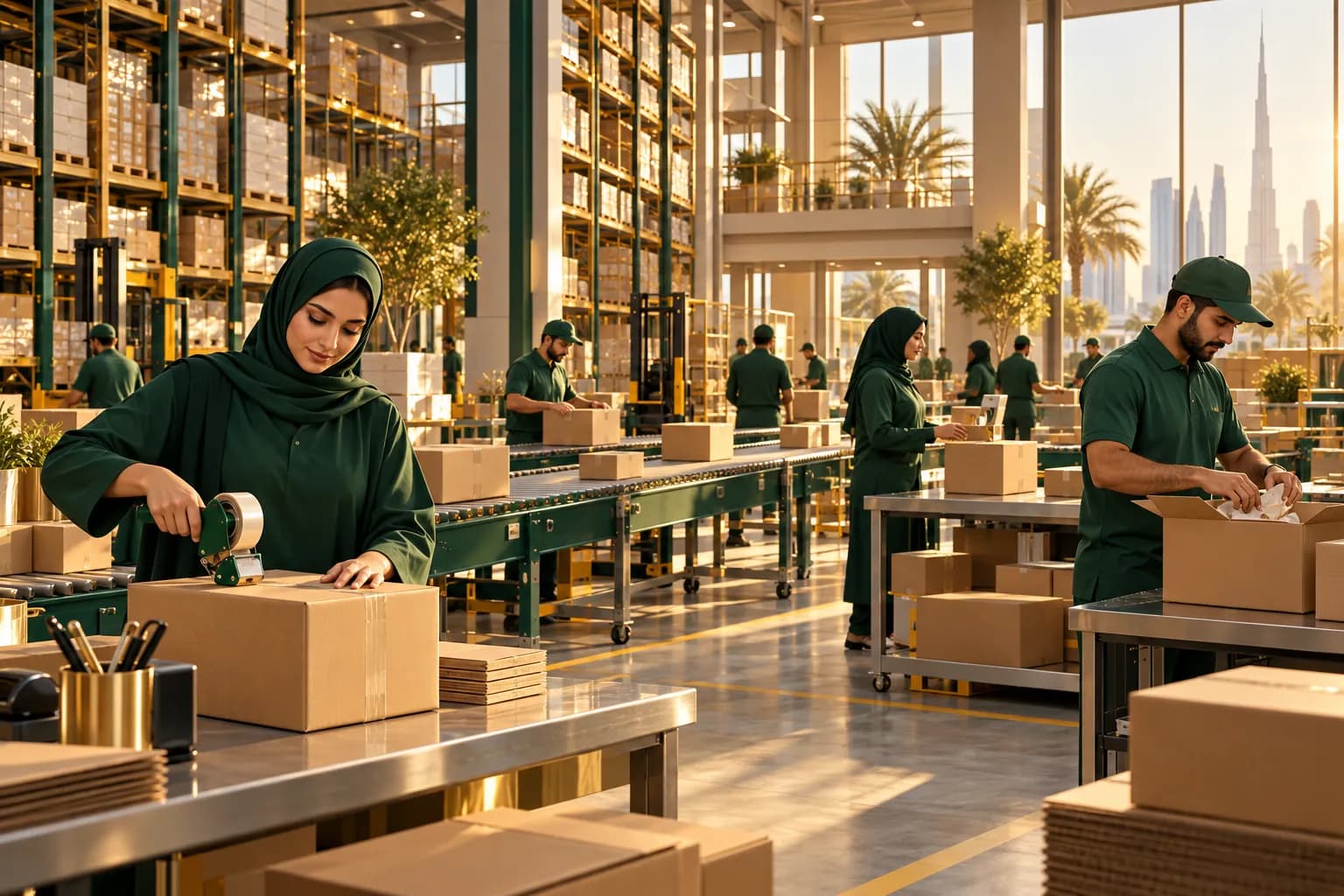
Delivery itself is a crowded field. No Saudi courier holds more than 15% of ecommerce logistics revenue, so most sellers use two or three through an aggregator. See how fulfilment in Saudi Arabia works, or compare vetted 3PL and fulfilment providers.
Step 5: Get compliant
Every Gulf country licenses and taxes separately. The good news? The questions are the same everywhere:
- Do I need a local licence? Not for cross-border marketplace sales. Yes for your own store with local stock: a Saudi CR (commercial registration) or a UAE free-zone or mainland licence.
- Do I need to register for VAT? Non-resident sellers with local stock usually register from their first sale in Saudi Arabia, Bahrain and Oman. DDP parcels into Bahrain need no registration. Kuwait and Qatar have no VAT.
- Are my products regulated? Saudi Arabia uses SABER certificates, and the UAE uses ECAS. Many consumer goods need Arabic labels.
- What must my store show? Your licence details, VAT-inclusive prices, Arabic terms and a clear returns policy.
Selling from abroad? Start with what foreign companies need, then check GCC VAT rates for 2026.
Step 6: Localise and market
Arabic matters most in Saudi Arabia. Shoppers spot machine translation fast, so hire a native Gulf copywriter for titles and ads.
For ads, Snapchat and TikTok bring reach, Google captures intent and micro-influencers build trust. Then time your launch to the calendar:
- 11 Nov 202611.11 Singles' Day
A standard marketplace deal window across the GCC.
- c. 19–30 Nov 2026White Friday / Yellow Friday
Amazon's and noon's biggest Q4 events, around Black Friday on 27 Nov.
- 2 Dec 2026UAE National Day
Patriotic creative, often with the 55th anniversary in promo codes.
- 4 Dec 2026 – 17 Jan 2027Dubai Shopping Festival
Mall-led, but online stores join with DSF deals.
- c. 8 Feb – 8 Mar 2027Ramadan 1448
The most important season. 76% of Saudi shoppers wait for Ramadan deals.
- c. 9 Mar 2027Eid al-Fitr
The gifting peak: fragrance, sweets, toys.
- 23 Sep 2027Saudi National Day
The biggest Saudi-only promo after White Friday.
Ramadan moves about 11 days earlier each year. Plan every date in the GCC ecommerce calendar, and get your Ramadan campaign ready early.
Incentives on offer right now
The two big marketplaces are actively recruiting in 2026. Here's what new sellers can claim:
- Amazon.sa fee cut. Sellers based in and shipping from Saudi Arabia get 30% off referral fees for 60 days. It applies to accounts launched 1 July to 31 December 2026.
- Amazon brand cashback. Up to 5% back on your first 3.5 million riyals or dirhams in branded sales, in both stores.
- Amazon ad credit. Up to SAR 3,500 or AED 3,700 in Sponsored Products credit for new listings.
- Amazon for Chinese sellers. A prepaid referral voucher worth up to USD 50,000, plus FBA inbound cashback of up to SAR 3,754 per product until 30 December 2026.
- Noon Global Shipping. Chinese companies can reach all six GCC countries with no Gulf company or VAT number.
Full terms are in Amazon new-seller incentives. Enrol before your first listing so you don't miss the window.
Notes for Chinese sellers
- Start with Amazon Global Selling China or noon Global Shipping. Neither needs a Gulf company.
- Ship from Shenzhen or Yiwu by air to test, then by sea once a product sells.
- Most products entering Saudi Arabia need a SABER certificate. Plan a few weeks for it before your first shipment.
- Overseas warehouses in Dubai or Riyadh cut delivery to 2–3 days and remove costly cross-border returns.
- The full playbook is in selling to the GCC from China.
Notes for Western brands
- Amazon Global Selling is the easiest door in. Your US, UK or EU account can list on Amazon.ae and Amazon.sa.
- Most Gulf retailers and specialist marketplaces want a local importer or distributor, so expect to need a partner beyond Amazon.
- Price in local currency, VAT included. Check your labels meet Arabic labelling rules before you ship.
- Shipping from the US? See shipping from the USA to Saudi Arabia.
Notes for Gulf-based founders
- A local CR or licence unlocks more: local gateways, Trendyol Gulf, the SHEIN marketplace and Amazon.sa's local-seller fee cut.
- Salla and Zid are the fastest way to launch an Arabic store in Saudi Arabia, with mada, Tabby, Tamara and COD built in.
- UAE companies can sell into Saudi Arabia through noon's Global Store programme before opening a Saudi entity.
- Need a hand with the whole launch? Our GCC market entry service covers it.
Explore each part of the guide

Market guides for Saudi Arabia, the UAE, Qatar, Kuwait, Bahrain and Oman.

Amazon, noon, Trendyol and more: fees, setup and which one to start with.
Shopify, Salla, Zid and WooCommerce for your own Gulf store.
mada, Apple Pay, BNPL, COD and the right gateway for each country.

Shipping, customs, couriers and fulfilment in Riyadh and Dubai.

Licences, VAT, SABER and consumer law, country by country.
Arabic listings, RTL stores, VAT-inclusive pricing and trust signals.
Snapchat, TikTok, influencers, SEO and the seasonal calendar.
Frequently asked questions
Yes. Amazon Global Selling lets US, European, Chinese and other sellers list on Amazon.sa and Amazon.ae with their home-country documents. Noon accepts foreign companies that register for UAE or Saudi VAT, and Chinese companies through noon Global Shipping. You'll want a local entity later for your own gateway, bank account and imports in your name.
Sources & further reading
- Digital 2026 reports for the six GCC countries — DataReportal
- eCommerce market data by country (Saudi Arabia, UAE and GCC) — ECDB
- E-Payments Account for 85% of Total Retail Payments in 2025 — Saudi Central Bank (SAMA)
- Saudi delivery sector tops 124M orders in Q4 2025 — Mubasher / Transport General Authority
- UAE e-commerce market size reaches AED 42.2bn in 2025 — EZDubai / Euromonitor International via Zawya
- Expand to the Middle East (UAE and Saudi Arabia) — Amazon Global Selling
- noon Global Shipping program — noon
- Dubai Customs exempts goods up to Dh1,000 from import duty — Khaleej Times
This guide is for general information only and is not legal, tax or financial advice. Rules and fees change — always confirm with the official source or a licensed advisor.

Maya is MiddleEastEcom's lead guide and editor. She researches GCC marketplaces, payments and regulations and turns them into practical playbooks for sellers.
Meet Maya