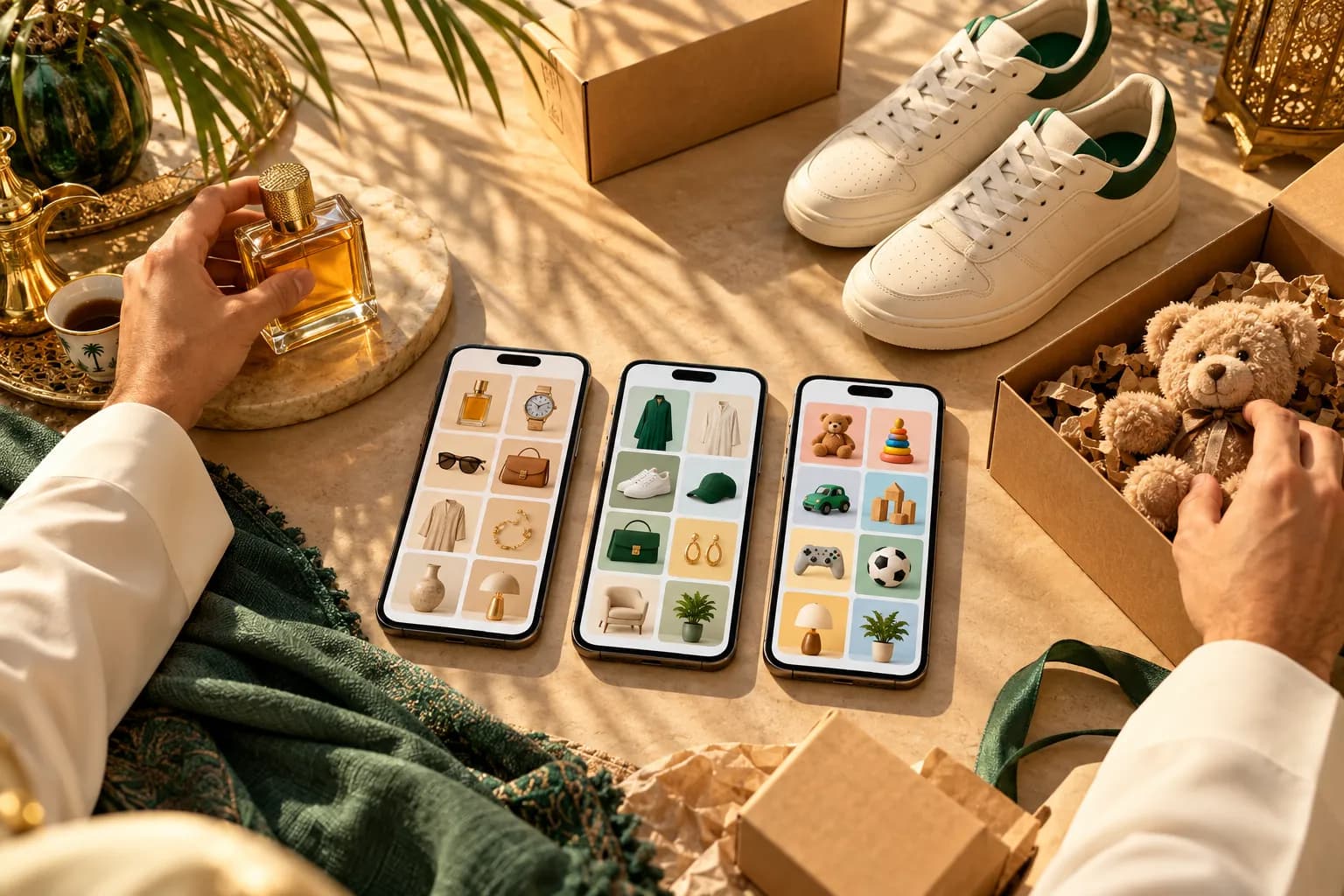

- Amazon is the biggest marketplace in Saudi Arabia and the UAE. Noon is the strong local number two.
- Both accept foreign sellers, so a marketplace is the quickest way to test the Gulf without your own store.
- In 2026, Trendyol, SHEIN and Temu opened their Gulf apps to local sellers, so there are more doors in than ever.
- Most marketplaces take a 5–15% commission on each sale, plus a fee if they store and ship your stock.
- Start on Amazon or noon, get your first orders, then add a specialist marketplace, quick commerce or your own store.
Gulf shoppers already buy online in their millions, and the easiest way to reach them is through an app they open every day.
Amazon and noon are the two giants. Both welcome foreign sellers, and both are handing out fee discounts and ad credits to win new ones in 2026.
The newer apps are opening up too. This year Trendyol, SHEIN and Temu started taking local Gulf sellers, so you have more ways in than ever.
So where should you start? For almost every new seller, it's Amazon or noon. They have the most shoppers and the clearest routes in from abroad.
What is an online marketplace, and why start there?
A marketplace is a shared online store where many sellers list their products. It brings the shoppers, takes the payment and often delivers the order for you, so you can focus on what you sell.
That makes it the fastest way to test the Gulf:
- Traffic from day one. You don't need to build an audience before your first sale.
- No Gulf company needed to start. Amazon and noon both have routes for foreign sellers.
- Delivery handled. Send stock to the marketplace's warehouse, and it picks, packs, delivers and handles returns.
- Trust built in. Shoppers already pay by card, Apple Pay or cash on delivery, and they know the returns policy.
The trade-off? You pay a commission on each sale, and the customer belongs to the marketplace.
Your own store keeps more margin and builds a customer list you can sell to again. That's why most Gulf brands run both, starting with a marketplace. Compare your store options on our ecommerce platforms hub.
The four kinds of Middle East marketplace
Not every shopping app works the same way for sellers. Gulf marketplaces fall into four groups:
- General marketplaces. Amazon and noon sell almost everything, and any approved seller can list. This is where most brands start.
- Cross-border apps. Temu, SHEIN, Trendyol and AliExpress grew by shipping from China and Turkey. Three of them now take local Gulf sellers as well.
- Specialist and retailer stores. Namshi, Mumzworld, Carrefour, eXtra and Ounass focus on one category. Most are curated, so you apply or pitch rather than just sign up.
- Quick commerce. Apps like talabat mart, noon Minutes and Ninja deliver groceries and essentials in under an hour from their own dark stores (small delivery-only warehouses).
How big are they? Saudi traffic gives a good picture of who shoppers actually visit:
Temu and SHEIN look huge here, and they are. But most of their sales still come from their own suppliers in China, and their local seller programmes are brand new.
For a seller who wants a clear, open path in, Amazon and noon remain the place to start.
Middle East marketplaces compared
Here are the facts that decide the choice: where each one sells, who can join, what it costs and who delivers.
| Countries | Who can sell | Typical fees | Fulfilment | |
|---|---|---|---|---|
| Amazon (.sa / .ae) | Saudi Arabia, UAE | Local companies; foreign sellers via Global Selling | 3–16% referral on .sa, 4.5–15% on .ae; FBA about SAR 10 / AED 10.5 per small parcel | FBA, Easy Ship or self-ship |
| noon | UAE, Saudi Arabia (ships to more GCC states) | Local companies; foreign firms with UAE/KSA VAT; Chinese firms via noon Global Shipping | 14–15% on most items, 27% fashion, 5–6% phones; FBN about SAR/AED 10 per small parcel | FBN, or ship it yourself |
| Trendyol Gulf | All 6 GCC states | KSA and UAE companies; China/HK and Turkish sellers via export routes | Clothing 16%, home 14–15%, intro discount | Seller ships, with Trendyol's carrier or your own |
| SHEIN Middle East Marketplace | Saudi Arabia, UAE | Brands and retailers, usually with a local entity | Agreed when you join | Seller fulfils from local stock |
| Temu (Local Seller Program) | UAE | UAE-registered businesses with UAE stock | Agreed when you join | Seller ships from the UAE |
| Quick commerce (talabat mart, noon Minutes, Ninja) | Varies by app | Suppliers and distributors | Supplier terms | The app's own dark stores |
1. Amazon.sa and Amazon.ae: best for reach
Amazon is the global giant. It's the most-visited shopping site in Saudi Arabia and the biggest online store by sales in the UAE.
It runs two separate stores, Amazon.sa and Amazon.ae, and serves the rest of the Gulf from them. Shoppers include locals and the millions of expats who already know Amazon from home.
Amazon is best for:
- Foreign brands. Global Selling lets you register without a Gulf company.
- Sellers who want the most shoppers. No other marketplace in the region gets more traffic.
- Fast delivery. FBA (Fulfilled by Amazon) listings get the Prime badge, with one-day delivery in the UAE and two-day delivery in Saudi Arabia.
- New sellers who like good support. Sellers say most issues get fixed within hours.
The catch? More sellers compete for each keyword, so clicks cost more. Payouts come every 14 days.
Amazon is also paying new sellers to join this year, with fee discounts and ad credits for newcomers.
2. noon: best for an easier, cheaper start
Noon is the home-grown challenger. It ranks number two by UAE online sales and has a loyal, Arabic-speaking audience in both countries.
It has stores in the UAE and Saudi Arabia and ships to Kuwait, Qatar, Bahrain and Oman. It also owns Namshi, the fashion store, and runs noon Minutes for 15-minute delivery.
Noon is best for:
- Testing the market on a budget. Sellers often pay under SAR 1 a click on noon, and new listings rank faster.
- Steady cash flow. Noon pays weekly, every Thursday.
- Phones and electronics. Its commission on phones is among the lowest in the region.
- Chinese factories. Its noon Global Shipping programme lets Chinese companies sell to all six GCC states without a Gulf company.
The trade-off is support, which sellers describe as slower than Amazon's. Most brands end up on both, and our noon vs Amazon comparison works through the fees, ads and payouts side by side.
3. Trendyol Gulf: best for fashion across the whole GCC
Trendyol is Turkey's biggest marketplace, and it sells in all six GCC states from one app. Shoppers come for fashion, modest wear, shoes and home textiles at good prices.
It started by shipping from Turkey. Now local Gulf sellers make almost two-thirds of its Gulf sales, and it has signed up 15,500 regional sellers.
Trendyol is best for:
- Fashion and modest-wear brands. It's built around clothing, and its clothing commission is 16%.
- Reaching smaller Gulf markets. One listing reaches Kuwait, Qatar, Bahrain and Oman too.
- New local sellers. Newcomers get a commission discount for their first couple of months.
You'll need a Saudi or UAE company to join the local marketplace. See whether you qualify in Trendyol for non-Turkish sellers.
4. SHEIN Middle East Marketplace: best for trend-led fashion and beauty
SHEIN is the third most-visited shopping site in Saudi Arabia. Until this year, only its own suppliers could sell there.
That changed in January 2026, when the SHEIN Middle East Marketplace went live for brands and retailers. More than 600 sellers had joined by October.
SHEIN is best for:
- Young, trend-driven fashion. Its shoppers want new styles every week.
- Beauty and home brands that already hold stock in Saudi Arabia or the UAE.
Fees are agreed when you join, and you ship from local stock. It's a fresh channel, so early sellers face less competition.
5. Temu: best for value goods in the UAE
Temu is the second most-visited shopping site in Saudi Arabia, famous for very low prices. Most of what it sells still ships from Chinese suppliers.
Since January 2026, its Local Seller Program has let UAE-registered businesses with stock in the UAE sell on Temu too. There's no Saudi version yet.
Temu is best for:
- UAE businesses selling everyday, low-price goods.
- Chinese suppliers, through Temu's managed model, where Temu sets the retail price.
Want the full picture on the Chinese apps? Read selling on Temu, SHEIN or AliExpress in the GCC.
6. Quick commerce: best for groceries, beauty and essentials
Quick commerce means delivery in under an hour, from dark stores close to the shopper. It's one of the fastest-growing ways to buy in the Gulf.
The big apps differ by country:
- talabat mart covers the UAE, Kuwait, Qatar, Bahrain and Oman, but not Saudi Arabia.
- noon Minutes promises 15-minute delivery in the UAE and Saudi Arabia.
- Ninja leads quick commerce in Saudi Arabia, with 100+ dark stores.
Here's the proof it works: talabat's grocery and retail sales rose 45% in the last quarter of 2025.
You don't list here like on Amazon. Instead, you supply the app's dark stores, usually through a local distributor. It's best for FMCG (everyday packaged goods), beauty, baby and pharmacy brands.
See how to get your products in with our guide to quick commerce in the GCC.
7. Specialist marketplaces: Namshi, Mumzworld, Carrefour and more
Specialist stores reach shoppers who already know what they want. Most are curated, so you apply, get vetted, then list.
- Namshi. Owned by noon since 2023, it sells mid-market fashion, sportswear and beauty in the Gulf. Brands usually get in through a distributor.
- Mumzworld. The Gulf's big mother-and-baby store, with about 250,000 products. It accepts brands and distributors from around the world, and review takes about a week.
- Carrefour. The UAE's third-biggest online store by sales, strong in groceries, electronics and home. It now operates only in the UAE and Saudi Arabia.
- eXtra. A Saudi electronics retailer with a vetted marketplace. It delivers small items for you, while you ship bulky ones.
- Ounass. The luxury store run by Al Tayer. Designer brands join by wholesale or concession agreement, not open sign-up.
These work best as a second channel, once your products sell on Amazon or noon. Every one, with who can join and how, is in our full GCC marketplace comparison.
How to choose and launch your first marketplace
Picking a marketplace comes down to three questions. Where is your company, where will your stock sit, and what do you sell?
Answer those, then follow these steps:
- 1
Pick your first marketplace
Amazon for reach, noon for a cheaper, faster test.
- 2
Check your route in
Use your local company, Amazon Global Selling or a noon international route.
- 3
Price your top products
Add commission, fulfilment and VAT before you buy stock.
- 4
Write Arabic listings
Arabic titles help you show up in search, especially in Saudi Arabia.
- 5
Add a second channel
A second marketplace, quick commerce or your own store, once your first orders flow.
Worked example: a towel set on three marketplaces
Let's price a bath towel set that sells for SAR 150 in Saudi Arabia. It weighs 0.8 kg, takes up about 0.25 cubic feet and ships as a standard small parcel.
On Amazon.sa and noon, you'd let the marketplace store and ship it. On Trendyol, you ship it yourself:
| noon KSA (FBN) | Amazon.sa (FBA) | Trendyol Gulf | |
|---|---|---|---|
| Commission (home, 14%) | SAR 21.00 | SAR 21.00 | SAR 21.00 |
| Fulfilment fee | SAR 10.00 | SAR 10.00 | Your own delivery cost |
| Storage per unit per month | ~SAR 0.69 | ~SAR 0.75 | Your own warehouse |
| Marketplace fees | ~SAR 31.69 (21.1%) | ~SAR 31.75 (21.2%) | SAR 21.00 (14%) + delivery |
On Amazon and noon, the fees are almost identical. So the choice comes down to reach, ad costs and payouts, not commission.
Trendyol looks cheaper on paper, and its newcomer discount (usually 20–30% off) cuts the commission to SAR 14.70–16.80 for your first two months. But you pay for delivery, so add your courier and packing cost before you compare.
All three figures exclude VAT, which is charged on the fees too.
Try your own products in the calculator below. It covers Amazon and noon in both Saudi Arabia and the UAE.
Marketplace fee calculator
Amazon.sa, Amazon.ae and noon: see what you keep from every sale
Minimum referral fee: SAR 1.00 per item.
The price the shopper pays.
Landed cost: product, freight, duty.
Your numbers
Payout per unit
SAR 89.18What the marketplace transfers to you
Profit per unit
SAR 37.55Margin: 36.0% of price excl. VAT
- Referral fee(14.0% of price)
- SAR 16.80
- FBA fulfillment fee
- SAR 10.00
- VAT on fees (15.0%)(reclaimable)
- SAR 4.02
- Total marketplace fees
- SAR 30.82
- Net VAT you remit
- SAR 11.63
- Product cost
- SAR 40.00
Where the price goes
- Referral14.0%
- Fulfillment8.3%
- VAT on fees3.3%
- Net VAT9.7%
- Product cost33.3%
- Profit31.3%
Excludes storage, ads, returns and promotions. Estimates based on published Amazon (Aug 2025) and noon (Sep 2026) rate cards, as of 26 October 2026. Confirm with the marketplace before pricing.
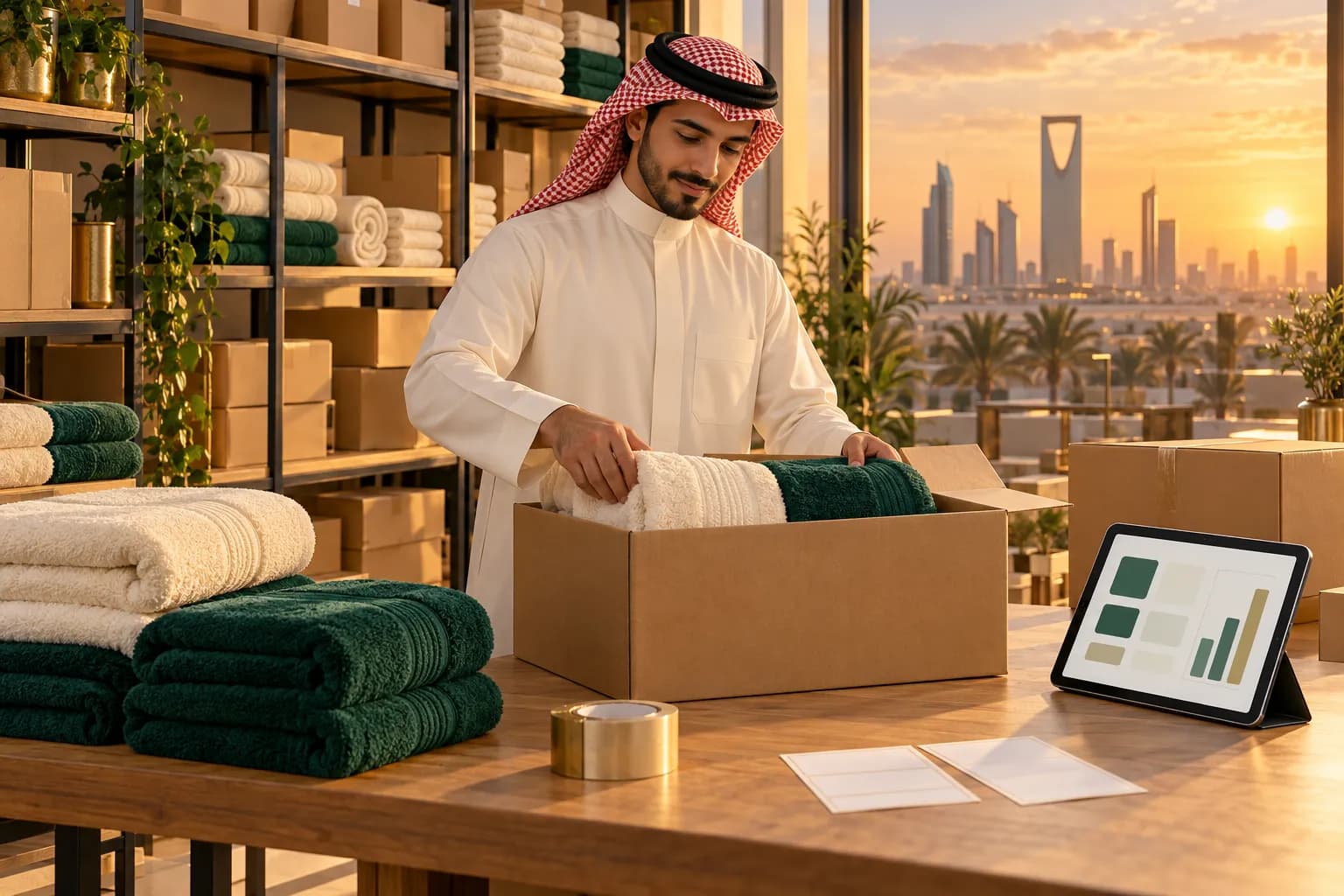
Run this sum for your top five products before you buy stock. Then look up the details for each marketplace on our Middle East marketplaces hub.
Notes for foreign brands
If you don't have a Gulf company yet, your open doors are clear:
- Amazon Global Selling is the simplest route. Register from home and use FBA.
- noon accepts foreign companies that register for Saudi or UAE VAT.
- Mumzworld takes baby and kids' brands from around the world.
- Trendyol, SHEIN and Temu mostly need a local company and local stock. Add them once you have a Gulf entity.
Notes for Chinese sellers
Chinese companies have more routes than anyone. Amazon China Global Selling and noon Global Shipping both let you sell without a Gulf company, and Amazon adds China-only launch incentives in 2026.
You can also supply Temu and SHEIN through their managed programmes, and Trendyol has a China and Hong Kong cross-border route. Start with noon for Chinese sellers if you want to cover all six GCC states fast.
Notes for fashion and beauty brands
Fashion is where marketplace fees differ most:
- Amazon charges 15% on apparel.
- Trendyol Gulf charges 16% on clothing and is built around fashion shoppers.
- Noon charges 27% on fashion, so many brands reach noon's shoppers through Namshi instead.
Beauty brands do well on Amazon and noon, then add SHEIN and quick commerce. Fragrance costs 15% on both in Saudi Arabia and suits noon's local audience well.
Prefer to hand the day-to-day work to experts? Browse our marketplace management agencies.
Frequently asked questions
Amazon. Amazon.sa is Saudi Arabia's most-visited shopping site, and Amazon.ae is the UAE's biggest online store by sales. Noon is number two by UAE sales, and Carrefour is third.
Sources & further reading
- Top websites in Saudi Arabia: e-commerce and retail (Sep 2026) — Semrush
- UAE eCommerce market data (2025) — ECDB
- Amazon Global Selling: expand to the Middle East — Amazon
- Fulfilled by noon (FBN) fees in KSA — noon Seller Help Center
- Trendyol marketplace business models — Trendyol Developers
- SHEIN launches enhanced marketplace platform for Middle East sellers — Zawya
- Temu expands in UAE with local seller programme — Gulf Business
- Talabat posts 28% GMV growth in 2025 — TradeArabia
This guide is for general information only and is not legal, tax or financial advice. Rules and fees change — always confirm with the official source or a licensed advisor.

Maya is MiddleEastEcom's lead guide and editor. She researches GCC marketplaces, payments and regulations and turns them into practical playbooks for sellers.
Meet Maya